Auto repair and dealership service where every repair order has an owner — from check-in to the parts supplier and back
Mi Retail is the operations center for repair shops, dealerships and after-sales teams: every repair order, customer approval, parts request to a supplier and quality check becomes a work item with an owner, a state and evidence. Your DMS keeps the repair order and the invoice; Mi Retail keeps the vehicle moving until it is delivered.
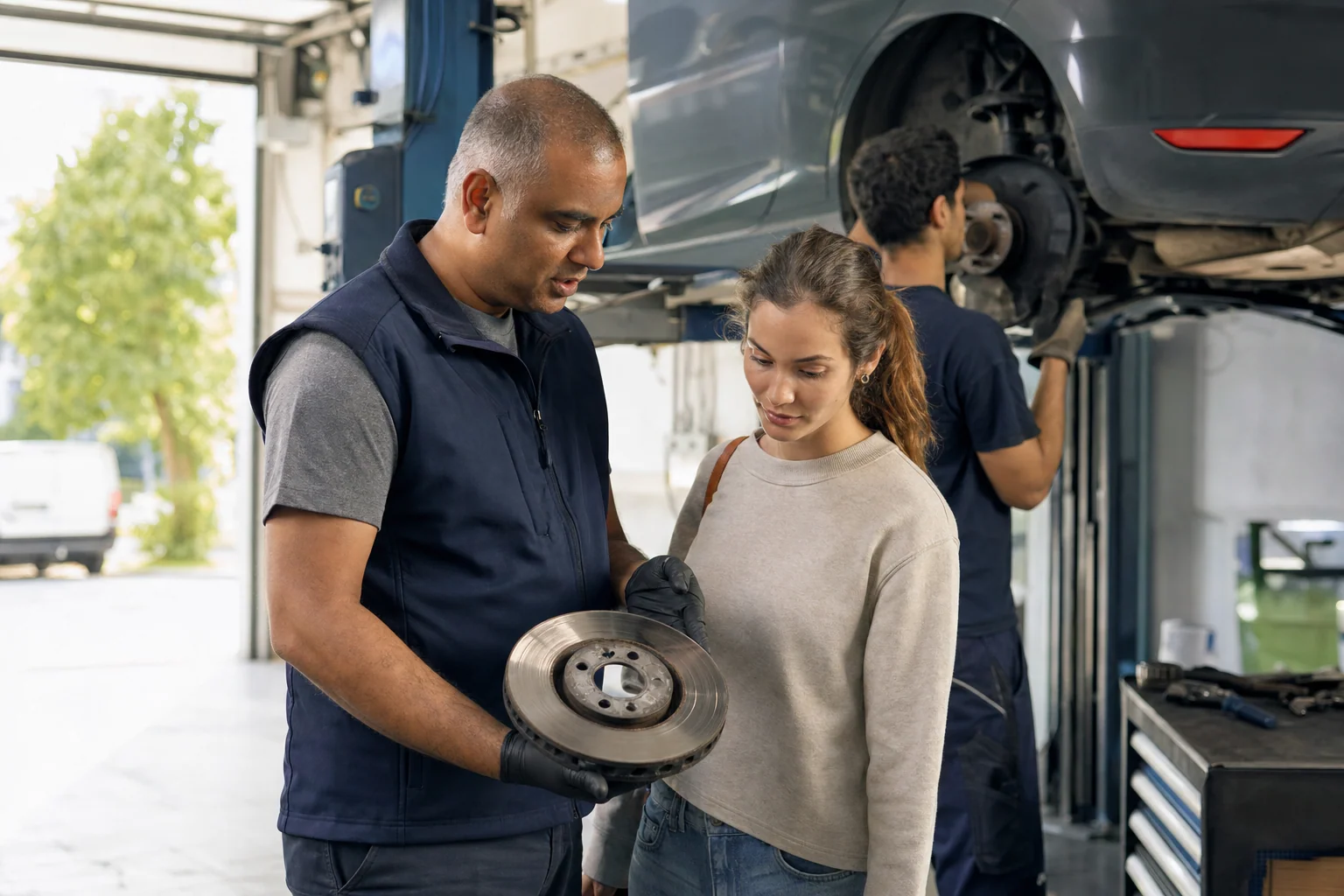


Why do vehicles stay in the workshop longer than promised?
Vehicles stay in the workshop longer than promised because the repair order is recorded in the DMS but the work around it is not: the estimate waits for the customer, the parts wait on a supplier call and the finished car waits for a road test nobody scheduled. Each wait lives in a different channel, so nobody sees the whole repair until the customer calls to ask.
-
Estimates wait on the phone
The technician finds the fault, but the customer’s approval depends on the advisor reaching them and remembering to note what was agreed.
-
Parts orders leave the shop
A part ordered from a distributor becomes a phone call or a message, and the bay stays occupied while nobody knows when it arrives.
-
Delivery without proof
When a customer comes back with the same noise, there is no record of the quality check, the road test or the parts that were fitted.
How do repair shops and dealerships handle this today?
Most shops and dealerships run a dealer management or shop management system for repair orders, labor and invoicing, and coordinate everything around it through calls, messaging apps and a whiteboard in the workshop.
Specialized software
What it does well
Repair orders, labor operations, parts inventory, invoicing and vehicle history are structured and reliable.
Where the work leaves it
The system records the repair order, but chasing the customer’s approval, following a part with an outside supplier and proving the quality check happen by phone, messages and paper.
Dealer and shop management systems (DMS) — e.g. CDK Global, Keyloop, Tekmetric1
Indie and AI-built apps
What it does well
A quick app for digital inspections or a parts request form is cheap and solves one bottleneck in days.
Where the work leaves it
It adds one more inbox with its own statuses, it does not reach the supplier’s team, and the repair order still has no single owner from check-in to delivery.
No system at all
What it does well
A whiteboard, a messaging group and a phone at the counter are immediate and everyone already uses them.
Where the work leaves it
Promises to customers depend on memory, parts orders get lost between calls, and nobody can show what was checked before the car left.
Keep your DMS. Mi Retail takes over where the work leaves it: between the service desk, the workshop, quality control and your parts suppliers.
Start freeHow does a repair order move from check-in to delivery when parts come from a supplier?
A brake repair moving through Mi Retail — from the service check-in to the parts distributor’s own team and back to the customer — with the state of each work item at 10:50 am.
 Kwame
 Amara
Step by step
- Service advisor In progress
RO 7715 · brake noise · SUV
The advisor checks the vehicle in, records the mileage and photos, and opens the repair order work item that will hold the whole visit until delivery.
- Technician Completed
Diagnose front brake noise
The technician inspects the brakes, finds worn front pads and scored rotors, and closes the diagnosis with measurements and photos.
- Service advisor Completed
Customer approval · brake estimate
The advisor sends the estimate with the technician’s photos and records the customer’s approval on the work item, so nobody has to remember what was agreed by phone.
- Northline Parts Supply · Parts counter In progress
Front pads and rotors · RO 7715
A derived work item lands in Northline Parts Supply’s own Mi Retail, where their counter team picks the parts and dispatches them with the part numbers the workshop asked for.
- Technician Waiting
Replace front pads and rotors
The repair is waiting for the supplier’s delivery, so the technician takes the next car in the meantime and sees the moment the parts arrive.
- Workshop foreman New
Quality check and road test
The foreman checks the work against the repair order and road-tests the vehicle before it can be released to the customer.
- Service advisor New
Deliver vehicle to customer
The advisor explains the repair, hands over the old parts and the photos, and the repair order closes with its full trail attached.
One work item, two organizations
A derived work item lands in Northline Parts Supply’s own Mi Retail, where their counter team picks the parts and dispatches them with the part numbers the workshop asked for.
What changes for the shop
- Every repair order has an owner and a visible state, from check-in to delivery.
- Customer approvals are recorded on the work item, not remembered from a call.
- Parts orders to suppliers move as derived work items both sides can follow.
- Every delivered vehicle carries its quality check and photos, ready for a warranty claim or a comeback.
Apps involved
- Work Orders In StoneOS
- Diagnostics In StoneOS
- Estimates In StoneOS
- Parts In StoneOS
- Service History In StoneOS
- Warranty In StoneOS
- The DMS you already use Keep your current system
Frequently asked questions: Automotive
What is Mi Retail for repair shops and dealerships?
Mi Retail is an operations center for repair shops, dealership service departments and after-sales teams. It does not replace the dealer or shop management system; it manages the human work that has to happen around each repair order. The check-in, the diagnosis, the customer’s approval, the parts request to a supplier, the repair, the quality check and the delivery become work items with an owner, a state, a due time and evidence. Each person sees the part that is theirs: advisors see their promises to customers, technicians their bay, the foreman what waits for quality control and the service manager only the exceptions.
Does Mi Retail replace my DMS?
No. Your dealer or shop management system stays the system of record for repair orders, labor operations, parts inventory, invoicing and vehicle history, and Mi Retail never keeps a second copy of them. What Mi Retail adds is the coordination the DMS was not built for: who must act next on a repair order, what it is waiting for, when it must escalate and with which evidence it closes. The DMS knows the repair order is open; Mi Retail knows it is waiting on a supplier, that the customer approved at 9:40 and that quality control is next. Keep your DMS; Mi Retail takes over where the work leaves it.
How does a repair order move through Mi Retail from check-in to delivery?
The service advisor checks the vehicle in and opens a repair order work item that holds the whole visit. The technician receives the diagnosis in their queue and closes it with measurements and photos. The advisor sends the estimate and records the customer’s approval on the same case. If parts must come from outside, a derived work item goes to the parts supplier’s organization, and the repair waits with that reason visible instead of occupying someone’s memory. When the parts arrive, the technician completes the repair, the foreman runs the quality check and road test, and the advisor delivers the vehicle with the evidence attached.
How are parts orders to an outside supplier handled?
A parts request to a distributor or another dealership is sent as a derived work item, so both organizations need to be on Mi Retail. The shop picks the supplier from the directory and sends the part numbers, quantities and the time it needs them; the supplier receives the request in its own intake queue and assigns it inside its own team. Each side keeps its privacy: the shop follows the state, the promised time and the proof of delivery, but not the supplier’s internal work. When the supplier closes its work item, the waiting repair is released and the technician sees it immediately, without a single follow-up call.
How does Mi Retail record the customer’s approval of an estimate?
The estimate approval is a work item on the repair order, not a note on the counter. The advisor attaches the estimate with the technician’s findings and photos, and records the customer’s decision with the date, the approved lines and any work the customer declined. Declined recommendations stay on record, which matters when the customer returns months later with the same issue. If the customer does not answer by the due time, the advisor sees the approval at risk and can follow up before the bay sits idle. The repair only moves forward once the approval is in, and everyone downstream can see it.
What do advisors, technicians and the service manager each see?
Each role enters Mi Retail through its own surface. A technician opens My Work and sees the diagnoses and repairs assigned to their bay, in order of priority. An advisor sees the repair orders they own and the promises made to each customer, with the ones at risk first. The foreman uses Team Operations to balance the load between bays, reassign work and spot repairs waiting for parts or approvals. The service manager uses Operational Portfolio to see how the whole department is doing, and Executive Operations shows only what needs their decision, such as a costly goodwill repair or a supplier that keeps missing its times.
How does Mi Retail help with warranty claims and comebacks?
Every repair order closes with its evidence: the inspection report, the approved estimate, the parts that were fitted, the quality checklist, the road test and the before-and-after photos. When a vehicle comes back with the same complaint, the shop can open the previous case and see exactly what was done, by whom and what was checked before delivery. A comeback becomes its own work item linked to the original repair, so the root cause gets an owner instead of an argument. For warranty work, the same trail supports the claim the dealership files with the manufacturer, captured while the work happened rather than rebuilt later.
Can dealerships use Mi Retail for sales and after-sales, not only the workshop?
Yes. A dealership is full of handoffs outside the workshop: a sold vehicle needs preparation, accessories and paperwork before delivery; a test drive request needs a car and a salesperson; an after-sales campaign needs customers contacted and appointments booked. Each of those becomes a work item with an owner and a due time, moving between sales, the workshop, administration and after-sales. The sales manager sees which deliveries are at risk, and after-sales sees which service reminders or recall appointments are still open. The dealership keeps its sales and service records where they are; Mi Retail coordinates the people who move the vehicle to the customer.
Does Mi Retail work for a small independent garage as well as a dealer group?
Yes, it is the same product at both ends. In a small garage where the owner receives cars, diagnoses and calls suppliers, the experience collapses to one Today view: which vehicles are waiting for approval, which are waiting for parts and which must be ready by the afternoon, without teams or hierarchies that do not exist. In a dealer group with several locations, the same work items are distributed across advisors, technicians, foremen, parts and management, each with its own surface, and the group can compare how each location is doing. What changes is how responsibilities are split, not how the repair order is represented.
Can a parts distributor or a body shop partner use Mi Retail with us?
Yes, as long as they have their own organization on Mi Retail. Parts distributors, body and paint shops, towing companies, glass specialists and other dealerships can all receive derived work items from you in their own intake, handle them with their own teams and close them with their own evidence. You see the state, the promised time and the result; they see only what you sent them. For a distributor, this means every order from every shop arrives in one queue with part numbers and deadlines instead of scattered calls. For a body shop partner, a sublet repair stops being a phone call and becomes a case both sides can follow.
Which StoneOS apps come with the Automotive edition?
The Automotive edition of StoneOS brings apps for the domain work of a shop or dealership — Vehicles, Customers, Appointments, Work Orders, Diagnostics, Repairs, Parts, Labor, Estimates, Service History, Warranty, Dealership Sales, Test Drives and After-Sales — on top of the Business Core apps every team uses, such as Calendar, Chat, Docs, Drive and People. Those apps keep the depth of each domain. Mi Retail is where the work they generate meets the people who must move it: a diagnosis waiting for approval, a part that has to be ordered or a vehicle that failed its quality check lands as a work item in the right person’s queue. If you keep your current DMS, it stays the record.
How does a repair shop or dealership get started with Mi Retail?
Start with the stretch of the repair where cars wait the most — usually estimate approvals or parts orders — instead of modeling the whole dealership. Create a service workspace, invite the advisors, technicians and the foreman, and open the next repair orders as work items with an owner and a promised time. Invite your main parts supplier to its own organization so orders move as derived work items. Within a couple of weeks you will see where vehicles wait and why. Then add quality control, delivery and after-sales, connect the DMS you already use and bring in the Automotive edition apps when they fit. Mi Retail is free to start.

Put the work in motion with Mi Retail
Start free with your team, bring in the systems you already use, and give every request an owner, a state and a result.
Run the workshop’s domain work on StoneOS
Appointments, work orders, parts and estimates run in StoneOS Automotive. Mi Retail moves the work from check-in to delivery.