Last-mile and fleet operations where every failed delivery has an owner — through dispatch and partner carriers
Mi Retail is the operations center for transport operators, carriers and logistics providers: every failed delivery, reschedule, breakdown and handoff to a subcontracted carrier becomes a work item with an owner, a state and evidence. Your TMS keeps the routes and shipments; Mi Retail keeps the people around them moving until the proof of delivery is in.
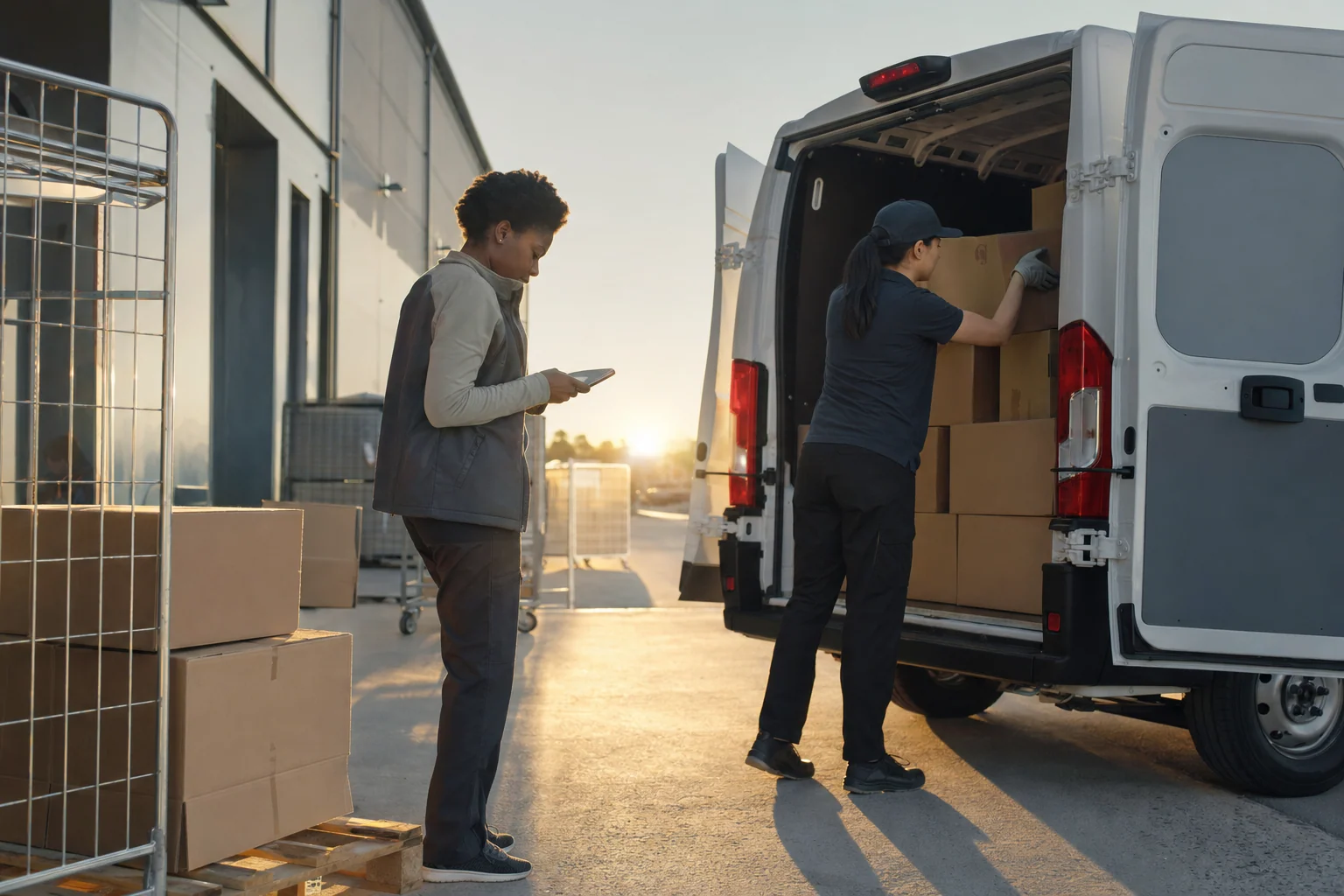

Why do failed deliveries fall between dispatch, drivers and carriers?
Failed deliveries fall through because the TMS records the attempt but nobody owns what happens next: the customer has to be called back, the route rebuilt, a partner carrier briefed and the proof of delivery collected. That work leaves the system and continues in driver calls, group chats and emails to another company, where the parcel quietly becomes a complaint.
-
The attempt is logged, not resolved
A driver marks “customer absent” and moves on; whether someone reschedules it depends on who reads the report.
-
Partner carriers work in the dark
Handing a route to a subcontractor means spreadsheets, calls and screenshots, with no shared state and no promise on when proof arrives.
-
Evidence is scattered
Photos, signatures and GPS stamps live in different apps, so a claim or a customer dispute is rebuilt by hand.
How do transport and logistics companies handle delivery exceptions today?
Most operators plan and execute in a transportation management system or a last-mile delivery platform, and resolve every exception around it through phone calls, group chats and spreadsheets shared with carriers.
Specialized software
What it does well
Route planning, load building, tracking, driver apps and proof of delivery capture are mature and precise.
Where the work leaves it
The system records the failed attempt, but calling the customer back, approving a subcontracted route and chasing another company for proof continue by phone and chat, outside the record.
Transportation management systems (TMS) and last-mile platforms — e.g. Oracle Transportation Management, Descartes, Onfleet1
Indie and AI-built apps
What it does well
A quick app for one gap — a redelivery form, a driver checklist, a shared exceptions board — is cheap and live in days.
Where the work leaves it
It becomes one more inbox with no owners or normalized states, it cannot reach a partner carrier’s own team, and it usually depends on whoever built it.
No system at all
What it does well
Radio, phone calls and a group chat with the drivers are immediate, and everyone already uses them.
Where the work leaves it
Nothing has an owner or a due time, promises to customers depend on memory, and when a parcel goes missing nobody can reconstruct who had it last.
Keep your TMS. Mi Retail takes over where the work leaves it: between drivers, dispatch, customer care and partner carriers.
Start freeHow does a failed last-mile delivery get rescheduled and completed by a partner carrier?
A delivery fails because the customer is absent and the address is incomplete. Here is how the exception moves through Mi Retail — from the driver’s attempt to a partner carrier’s proof of delivery — with the state of each work item on Wednesday at 10:40.
 Diego
Diego  Sofia
Sofia  Arjun
Arjun  Kwame
Kwame  Amara
Amara Step by step
- Drivers Completed
Failed attempt · parcel 20417
On Tuesday afternoon the driver finds nobody at the door and no unit number on the label, so the attempt is reported from the driver app with a doorstep photo instead of a note on a manifest.
- Dispatch In progress
Delivery exception · parcel 20417
The TMS marks the parcel as undelivered, and dispatch holds the whole case in one exception work item until the parcel is in the customer’s hands.
- Customer care Completed
Confirm new window and address
Customer care reaches the customer, confirms a 10:00–12:00 window for Wednesday and adds the missing unit number to the case.
- Dispatch Completed
Approve handoff · zone 7 to partner
With Northgate’s own vans full on Wednesday, the dispatch lead approves handing the redelivery to a partner carrier, and the reason is recorded on the work item.
- Swiftline Couriers · Last-mile operations In progress
Deliver parcel 20417 · 10:00–12:00
A derived work item lands in Swiftline Couriers’ own Mi Retail with the window and corrected address, and their driver has the parcel on today’s route.
- Swiftline Couriers · Last-mile operations New
Upload proof of delivery
When the parcel is handed over, Swiftline closes its work item with the signature, photo and GPS stamp as proof of delivery.
- Dispatch New
Close exception · notify customer
Once the proof of delivery arrives, dispatch closes the exception with the carrier’s evidence attached and the shipment is marked delivered in the TMS.
One work item, two organizations
A derived work item lands in Swiftline Couriers’ own Mi Retail with the window and corrected address, and their driver has the parcel on today’s route.
What changes for the transport operation
- Every failed delivery has an owner and a due time, from the first attempt to the proof of delivery.
- Routes handed to partner carriers move as derived work items both companies can follow.
- Dispatch starts each shift from a live list of open exceptions instead of a group chat.
- Claims and customer disputes are answered with the evidence already attached.
Apps involved
- Dispatch In StoneOS
- Routing In StoneOS
- Last Mile In StoneOS
- Proof of Delivery In StoneOS
- Carrier Management In StoneOS
- Exceptions In StoneOS
- Tracking In StoneOS
- The TMS you already use Keep your current system
Frequently asked questions: Transportation & logistics
What is Mi Retail for transportation and logistics companies?
Mi Retail is an operations center for carriers, couriers, freight and passenger transport operators and logistics providers. It does not plan routes or track vehicles; it manages the human work that appears around those systems. Every failed delivery, breakdown, damaged load, customer callback or handoff to a subcontracted carrier becomes an Operational Work Item with an owner, a state, a due time and evidence. Each person sees the part that is theirs: drivers their attempts to report, dispatch its open exceptions, customer care the customers waiting for an answer and the operations director only what needs a decision. The domain work — routing, loads, tracking, proof of delivery capture — runs in StoneOS apps or in the systems you already use.
Does Mi Retail replace my TMS or dispatch software?
No. Your transportation management system stays the system of record for shipments, routes, loads, rates and tracking events, and Mi Retail never keeps a second copy of them. What Mi Retail adds is the layer the TMS does not cover: the work that has to happen when a shipment needs a person. The TMS can tell you a delivery failed or a truck is late; Mi Retail manages who calls the customer, who approves a new route, which partner carrier takes it, what the case is waiting for and with which proof it can close. Keep your TMS; Mi Retail takes over where the work leaves it and records who did what, and when.
How does Mi Retail handle a failed last-mile delivery?
The driver reports the failed attempt with a photo and a GPS stamp, and dispatch opens a delivery exception that holds the whole case. From it, customer care receives a follow-up to confirm a new window and fix the address, so the second attempt does not fail for the same reason. If your own fleet has no capacity, the dispatch lead approves handing the redelivery to a partner carrier, and the reason is recorded. The carrier receives a derived work item, delivers and closes it with the proof of delivery. Dispatch then closes the exception with that evidence attached, and the shipment is marked delivered in the TMS.
Do subcontracted carriers and partner couriers need to use Mi Retail?
Yes. Work between companies moves as derived work items, so both the shipper or logistics provider and its partner carrier need their own organization on Mi Retail. You pick the carrier from the directory and send the delivery, pickup or linehaul request; the carrier receives it in its own intake queue and assigns it to its own drivers. Each side keeps its privacy: you follow the state, the due time and the proof of delivery, but not the carrier’s internal routes, other customers or conversations. When the carrier completes its work item, you are notified and your exception can close. That is how subcontracted routes stop living in spreadsheets and screenshots.
How does Mi Retail use proof of delivery as evidence?
Proof of delivery is the natural evidence that closes a delivery work item. The driver app or the carrier’s system captures the signature, the photo and the GPS stamp, and that proof is attached to the work item when it closes, together with the earlier attempts, the customer’s confirmation and any approval along the way. When a customer disputes a delivery or a claim for a damaged load arrives, the operator can show the whole trail in one place instead of asking drivers and carriers for screenshots. Control & Assurance lets an auditor or a key account review those trails, and the evidence holds up because it was captured while the work happened.
What do drivers, dispatchers and customer care each see in Mi Retail?
Each role gets its own surface on the same operation. A driver sees in My Work only what is theirs: the attempts to report, a vehicle inspection pending, a document to renew. Dispatch works from Team Operations, where open exceptions are ordered by due time, blocked items show their reason and work can be reassigned between drivers or handed to a carrier. Customer care sees the customers waiting for a window or a callback, with the case history already attached, so nobody has to ask dispatch what happened. Supervisors see load per person and what is at risk, and nobody needs access to the TMS configuration to take part.
How does Mi Retail handle incidents on the road, such as breakdowns, delays or damaged loads?
An incident on the road becomes an incident work item linked to the vehicle, the trip and the shipments it affects. A breakdown can trigger child work items: a rescue vehicle for the load, a workshop visit for the truck and callbacks to the customers whose windows are now at risk. A damaged load opens an exception with photos from the driver and a review by the claims team. Each piece has its own owner and state, and a blocked item carries its reason — waiting for a tow, a part or an insurer — so dispatch sees exactly what is holding the trip. When everything is resolved, the incident closes with its evidence.
What does an operations director of a transport company see in Mi Retail?
An operations director does not need to follow every parcel or trip. Operational Portfolio shows how each hub, region and service line is doing: open exceptions by age, redeliveries at risk, incidents in progress and partner carriers that keep missing their windows. Executive Operations surfaces only what needs a decision at that level, such as a costly claim, a recurring failure on the same route or a carrier whose performance should be reviewed. Each item carries its context and history, so the director can decide from Mi Retail instead of calling a meeting to rebuild the facts, and the decision is recorded for the next review.
Does Mi Retail work for passenger transport and freight operators, not only parcels?
Yes. The same model applies to any transport operation where a person has to act on something the system detected. For a passenger operator, a cancelled trip, a vehicle out of service, a lost-property report or a complaint about a driver becomes a work item with an owner and a due time. For a freight carrier, a missed pickup, a load refused at the dock, a detention dispute or a missing document for a border crossing is handled the same way. Trips, schedules and loads stay in the transport system; Mi Retail makes sure the people who must respond do so, and that the result is recorded.
Does Mi Retail make sense for a small courier as well as a large logistics network?
Yes, it is the same product at both ends. A small courier with a few vans and one person dispatching gets a single Today view with the failed attempts, the customers waiting and the partner deliveries in progress, without fake hierarchies or empty teams. A network with many hubs, hundreds of drivers and dozens of subcontracted carriers distributes the same work items across dispatch desks, customer care, claims and regional management, each with its own surface, and exceptions escalate to the right level. What changes is how responsibilities are split, not the way the work is represented, so nothing has to be redesigned as the operation grows.
Which StoneOS apps come with the Transportation and Logistics editions?
The Transportation edition of StoneOS brings apps for vehicles, drivers, routes, dispatch, trips, tracking and proof of service, and the Logistics edition adds shipments, loads, hubs, cross-docking, routing, last mile, proof of delivery, carrier management, exceptions and returns logistics. They come on top of the Business Core apps every team uses, such as Chat, Calendar, Drive, People and Sheets. Those apps keep the depth of each domain. Mi Retail is where the work they generate meets the people who must act on it: a failed delivery, a carrier handoff or a return that needs approval lands as a work item in the right queue. If you keep your current TMS, it stays the record.
How does a transport or logistics company get started with Mi Retail?
Start with the exception that costs you the most follow-up — usually failed deliveries or routes handed to subcontractors — instead of modeling the whole network. Create a dispatch workspace, invite the dispatchers, customer care and a few drivers, and open the next failed deliveries as work items with an owner and a due time. Invite one partner carrier to its own organization so the first handoff moves as a derived work item. Within a few weeks you will see where parcels wait and which routes fail repeatedly. Then connect the TMS you already use and, when it fits, add the StoneOS Transportation or Logistics edition apps. Mi Retail is free to start.

Put the work in motion with Mi Retail
Start free with your team, bring in the systems you already use, and give every request an owner, a state and a result.
Run routes, loads and deliveries on StoneOS
Dispatch, routing, last mile and proof of delivery run in StoneOS Transportation & Logistics. Mi Retail moves the exceptions.